
A Series of Articles on The Five Maitreya Texts
In English, this text is commonly translated as "Treatise on the Sublime Continuum".
In Sanskrit, the title is the Mahāyānottaratantraśāstra or, more fully, the Ratnagotravibhāga Mahāyānottaratantraśāstra.
In Tibetan, it is the Gyüd Lama (ཐེག་པ་ཆེན་པོ་རྒྱུད་བླ་མའི་བསྟན་བཅོས།).
In Wylie, it is theg pa chen po rgyud bla ma'i bstan bcos
In Chinese, it is jiu jing yi cheng bao xing lun (究竟一乘寶性論).
The Uttaratantra is a key Mahāyāna treatise that systematically explains Buddha Nature (tathāgatagarbha) as the innate, luminous potential for enlightenment present in all beings. It presents this “ultimate continuum” of buddhahood through the framework of the seven “vajra points,” summarizing the definitive Mahāyāna sūtras that teach the profound yet difficult-to-realize doctrine of buddha nature. We publish several major works on this text.

$49.95 - Hardcover
When the Clouds Part: The Uttaratantra and Its Meditative Tradition as a Bridge between Sutra and Tantra
This book discusses a wide range of topics related to the notion of Buddha Nature as presented in Indo-Tibetan Buddhism and includes an overview of the sūtra sources of the tathāgatagarbha teachings and the various ways of explaining the meaning of this term. It includes new translations of the Maitreya treatise Mahāyānottaratantra (Ratnagotravibhāga), the primary Indian text on the subject, its Indian commentaries, and two (hitherto untranslated) commentaries from the Tibetan Kagyü tradition. Most importantly, the translator’s introduction investigates in detail the meditative tradition of using the Mahāyānottaratantra as a basis for Mahāmudrā instructions and the Shentong approach. This is supplemented by translations of several short Tibetan meditation manuals from the Kadampa, Kagyü, and Jonang schools that use the Mahāyānottaratantra as a work to contemplate and realize one’s own buddha nature.

$37.95 - Paperback
Buddha Nature: The Mahayana Uttaratantra Shastra with Commentary
This is the famous commentary by Jamgön Kongtrül with an explanation by Khenpo Tsultrim Gyamtso.
Framed as a bridge between the teachings of emptiness and the luminous qualities of mind, it sets out key points: what Buddha Nature is, why it remains obscured, and how it is revealed through the path of practice. In this edition, Jamgön Kongtrül Lodrö Thayé’s commentary, “The Unassailable Lion’s Roar,” together with explanations by Khenpo Tsultrim Gyamtso Rinpoche, clarifies the text’s dense philosophical verses and shows how they relate directly to meditation and the lived experience of awakening.
$24.95 - Paperback
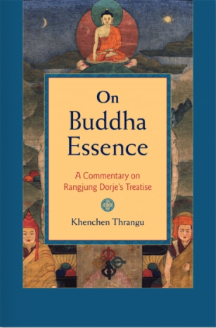
On Buddha Essence: A Commentary on Rangjung Dorje's Treatise
This is Khenchen Thrangu Rinpoche's commentary on Rangjung Dorje’s buddha‑nature treatise, which is itself an interpretive restatement of the Uttaratantra.

$29.95 - Paperback
In Praise of Dharmadhatu: Nagarjuna and Rangjung Dorje on Buddha Nature
This work's primary focus is Nāgārjuna’s Dharmadhātustava, but a large portion of the book is devoted to explaining buddha‑nature through key Uttaratantra verses and their Kagyu interpretations.

$26.95 - Paperback
Contemplating Reality: A Practitioner's Guide to the View in Indo-Tibetan Buddhism
One major section of Andy Karr's book introduces the Uttaratantra and uses its reasons, ten points, and nine examples as the main framework for presenting buddha‑nature within a broader survey of views.

$34.95 - Paperback
Finding Rest in the Nature of the Mind: The Trilogy of Rest, Volume 1
Longchenpa's great Dzogchen/khyenjuk manual contains extended buddha‑nature chapters that quote and unpack Uttaratantra root and commentary at length, though only as one part of a much larger lamrim–Dzogchen presentation.

$34.95 - Paperback
The Complete Nyingma Tradition from Sutra to Tantra, Books 19 & 20
This is a broad Atiyoga manual, but it explicitly uses Uttaratantra / buddha‑nature language and cites the Uttaratantra’s definitions of permanence, purity, etc., when presenting the ground and dharmakāya. It’s not a line‑by‑line commentary, but the Uttaratantra view is an important doctrinal reference point.