A Series of Articles on Ngöndro
3. The Nyingma Traditiona
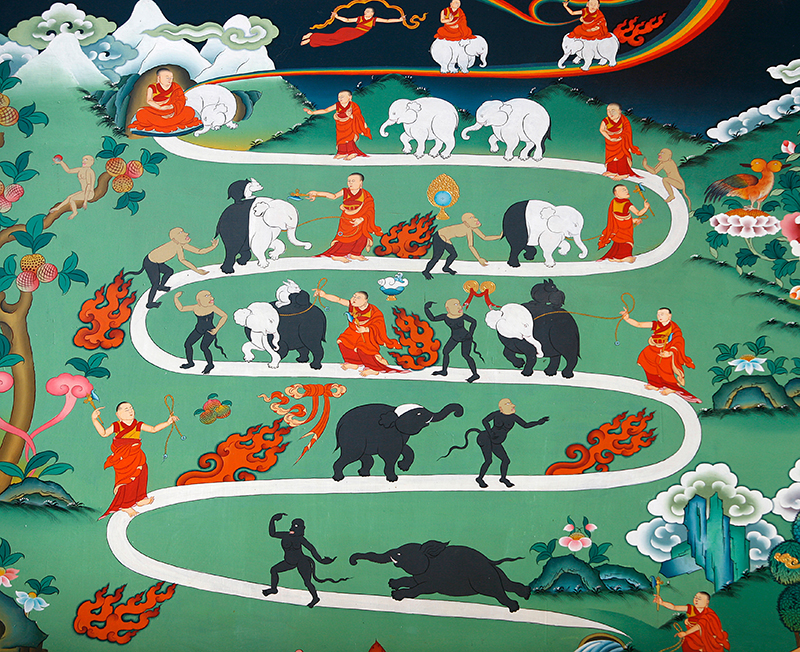
Tibetan Buddhism is often misunderstood and misrepresented outside its traditional homes of Tibet, Bhutan, Nepal, and India. Bulging-eyed deities, symbols, depictions of embracing figures, temples with incense-billowing, oracles, astrology and more can make it appear exotic. And exoticism is usually not the best characteristic to be attracted to on a spiritual path.
In fact, Tibetan Buddhism is a deliberate and highly sophisticated fusion of methods the Buddha and subsequent masters articulated and developed over the centuries. It contains the core shared by all Buddhist traditions, e.g. the Four Noble Truths, the Eightfold Path, Dependent Origination, and an understanding of the laws of karma, rebirth, and more. It contains the Mahayana teachings of the Buddha, with its emphasis on the Bodhisattva path, the Six Perfections, and an understanding of emptiness as expounded in the Prajnaparamita Sutras. And, for those who have the proper training in the aforementioned, the tantric practices of Vajrayana Buddhism are considered the most powerful approach to spiritual development.
So what is the best way to approach these teachings? Under the guidance of a qualified teacher with all the right training and experience, one will at some point be presented with the foundational or preliminary practices to pursue. The Tibetan word for these practices is ngondro, literally "what goes (dro) before (ngon)", in other words, the prerequisites for subsequent practices.

It is important to understand these practices are not simply a stepping stone—in fact, many of the greatest masters would include these in their own practice every day of their lives after being introduced to them. They are a life-long practice, at the core of every practice they may go on to do. Thus, Dzongsar Khyentse Rinpoche suggested "A Guide to the So-Called Preliminary Practices" for the subtitle of his book.
And Kalu Rinpoche said that the
"development of compassion and the realization of emptiness are the two requirements for achieving enlightenment. During the Four Foundation practices—particularly in Taking Refuge and Engendering the Enlightened Attitude and in the Guru-Yoga—these two are integrated."
These practices integrate the Mahayana and some Vajrayana practices. All agree that, without the basis of the Mahayana, the practices of the Vajrayana are out of reach. All the traditions of Tibetan Buddhism have a set of preliminary or foundational practices which a practitioner must embark on. The goal is to ensure the practitioner completely internalizes the teachings and wisdom of the Mahayana.

While this guide will look at the preliminary practices across traditions, the focus is the ngöndro which is found particularly in the Nyingma and Kagyu traditions. There are far more works in English from these traditions than in others. This is mostly a reflection of both these traditions' emphasis on ngöndro, as well as the popularity of these traditions in English-speaking practice communities. This is far from exhaustive, but covers the main ngöndro practices found in English-language books.
The Nyingma tradition has the richest set of literature available in English. This is a function of the influence of some of the greatest masters of the 20th century and their many students outside Asia, as well as the centrality of ngöndro practice among Nyingmapas. As Stephen Gethin of the Padmakara Translation Group notes in his acknowledgments in Torch Lighting the Way to Freedom, "Kyabje Dudjom Rinpoche himself explained many times that realization of the teachings of the Great Perfection depends solely on the practice of the preliminaries"
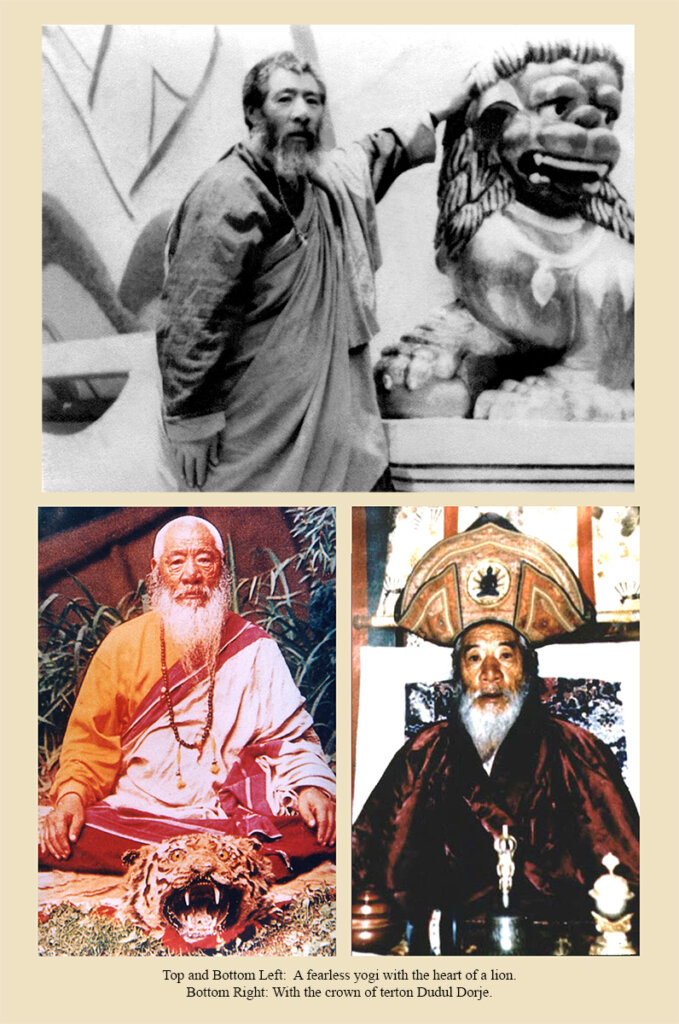
While these have often followed specific lineages within the Nyingma, many practice multiple ngöndros or repeat the set of accumulations multiple times. Famously, Chatral Rinpoche completed ngöndro fourteen different times.
Next, let's look at the main elements of ngöndro practice.