A Series of Articles on Ngöndro
3. The Nyingma Traditiona
Ngöndro has certain practice elements (or components) shared across all the traditions, but the specifics, order, and details can vary widely. Additionally, there are sections in some that are not in others.
So what is the best way to approach these teachings? Under the guidance of a qualified teacher with the right training and experience, one will eventually be presented with foundational or preliminary practices to pursue. The Tibetan word for these practices is ngöndro, literally "what goes (dro) before (ngön)", in other words, the prerequisites for subsequent practices.

The Four Outer Preliminaries
The four outer (sometimes referred to as common) preliminaries include:
- Reflecting on the Difficulty of Finding the Freedoms and Advantages that we have as a human being
- Reflecting on Death and Impermanence
- Reflecting on Actions: Cause and Result, i.e. Karma
- Reflecting on the Sufferings of Cyclic Existence
The word "reflecting" may make it sound like these are quick contemplations, but that is not the case. The idea is that the practitioner completely internalizes the teachings on how incredible and rare it is we have a precious human life; that impermanence is the mark of every thing, experience, and phenomenon and death is always only a breath away; that through time immemorial we have sown the seeds which ensure we will be buffeted by our karma; and that we will constantly experience the unsatisfactoriness from its most subtle to its most extreme forms of life.
The Four Inner Preliminaries
The inner preliminaries, sometimes called "uncommon" or "extraordinary", include:
- Taking Refuge
- Arousing the Mind Set on Enlightenment, Bodhicitta
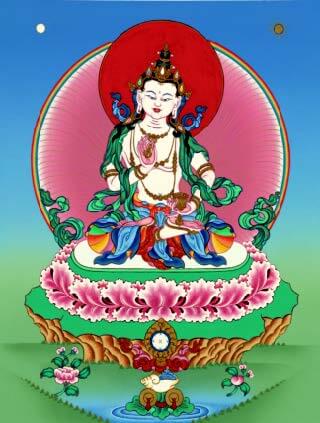
- The Meditation and Recitation of Vajrasattva for Purification
- The Maṇḍala Offering
- The Instruction on the Guru Yoga to Receive the Blessings of the Teacher

In terms of variation between traditions, Kalu Rinpoche had this to say in the introduction to Torch of Certainty, which is explored later in this series:
"The Four Foundations were practiced by all Tibetan sects. They were practiced in basically the same way by all the sects, with certain substitutions which reflected the interests of each sect. For example, the lineage of gurus visualized in the practices would vary from sect to sect.
In Taking Refuge, the Sakyapas, like the Kagyupas, would use Vajradhara as the central figure; the Nyingmapas would use Padmasambhava, and the Gelugpas would use Buddha Shakyamuni. Also in Taking Refuge, the yidams and dharmapalas would vary from sect to sect. For example, Vajrabhairava would be the chief Gelugpa dharmapala instead of the Kagyupa's Mahakala (Bernagche).
In the meditation on Vajrasattva, some sects would use the yab-yum form of Vajrasattva instead of the one we use. Even some Kagyudpas would use this form.
As for the Mandala-Offering, the visualization is the same for all sects, but the liturgy varies somewhat from sect to sect.The Guru-Yoga practice is virtually the same for all sects, but the liturgies differ slightly."
Additional Elements
There are additional elements that are common to some but not all ngöndro commentaries. Here are a few of them.
Following a Teacher
Teachings in these commentaries explain the qualities of a teacher, the qualities of the disciple, and how best for such a disciple to actually follow the teacher.
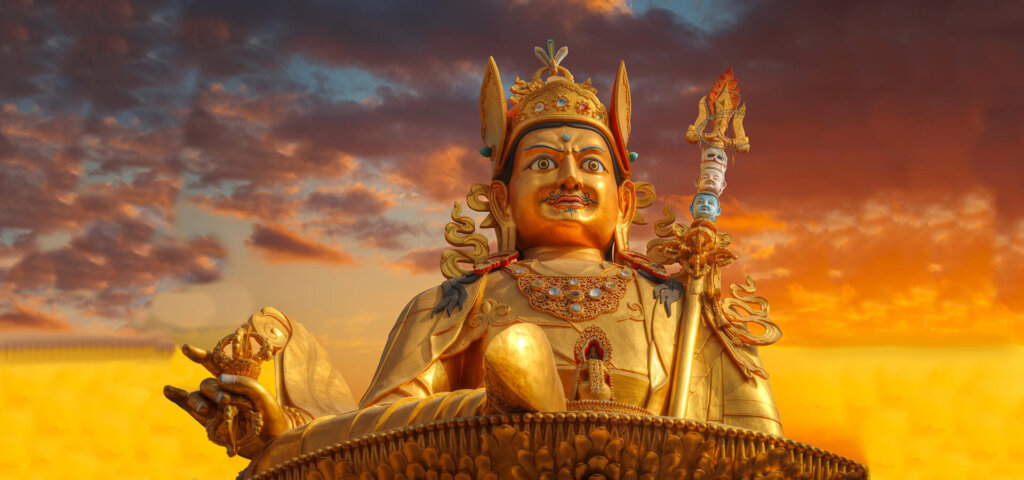
In Sky Dharma, Rigdzin Kunzang Sherab explains the qualities of a teacher by quoting Guru Rinpoche:
Guru Rinpoche says,
Generally, they should know the three aspects of the Great Vehicle teachings: namely: words, their meaning, and how to practice them.
-
They should have achieved signs and warmth (1) in the practice of the generation and completion stages and recitations; (2) in the practice of view, meditation, and conduct; and (3) in the practice of ground, path, and fruition.
-
They should be personally diligent in practice and should be skillful in guiding others for their benefit. They should have great compassion.
-
Their mind should be endowed with realization and pure perception, and they should treat others with altruism.
-
They should abandon the attachment to this life and focus on future lives.
-
They should be endowed with the blessings of their lineage and should have the quality of knowing the methods to practice.
In the Chariot to Freedom, Shechen Gyaltsap includes sections on a disciple's attitude, conduct, and how to listen to a teaching. In the conduct section, he expounds on the thirty-six faults, and discusses the six stains, which are:
- pride, thinking that one is better than the master who is giving the teaching
- lack of faith in the teacher and the teaching
- lack of real interest in the teaching
- mental distraction by the objects of the six consciousnesses outside
- excessive withdrawal of the five senses
- feeling fed up—on account of the teaching being too long, and so on

Dream and Sleep Practice
While only a few commentaries include this, here is the beginning of a section in Orgyen Chowang Rinpoche's From Foundation to Summit:
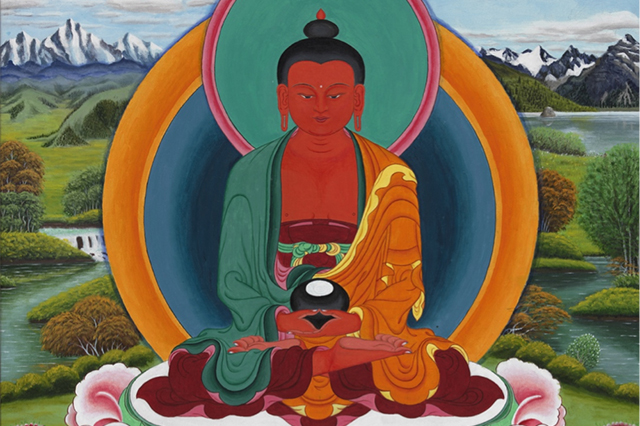
Phowa, or Transference of Consciousness at the Moment of Death
There are five types of phowa, including how a realized being can actually assist a deceased being, though this should not be attempted by those who are not qualified. But for most of us in the context of ngondro, it refers to practicing ejecting one's own consciousness at the time of death and becoming free of the endless rebirths. By practicing it every day, it can become second-nature and will be easier for the person to do at the critical time.
Here is how Khenpo Ngakchung explains the "Ordinary Transference Using Three Images" in The Guide to the Words of My Perfect Teacher:
Ordinary transference using three images is for beginners who merely aspire to the supreme Dharma and have no sign of success on the path to presage liberation in this life, at death, in the intermediate state, or in lives to come.
Transference is performed by means of three images—of the central channel as the route, the pure land of Sukhavati as the destination, and the consciousness as a traveler. When signs of approaching death occur, you should check three times whether they are reversible. If there is no turning back and you have time to dispose of all your belongings, do so. But if time is short, give them away mentally so as to be without attachment.
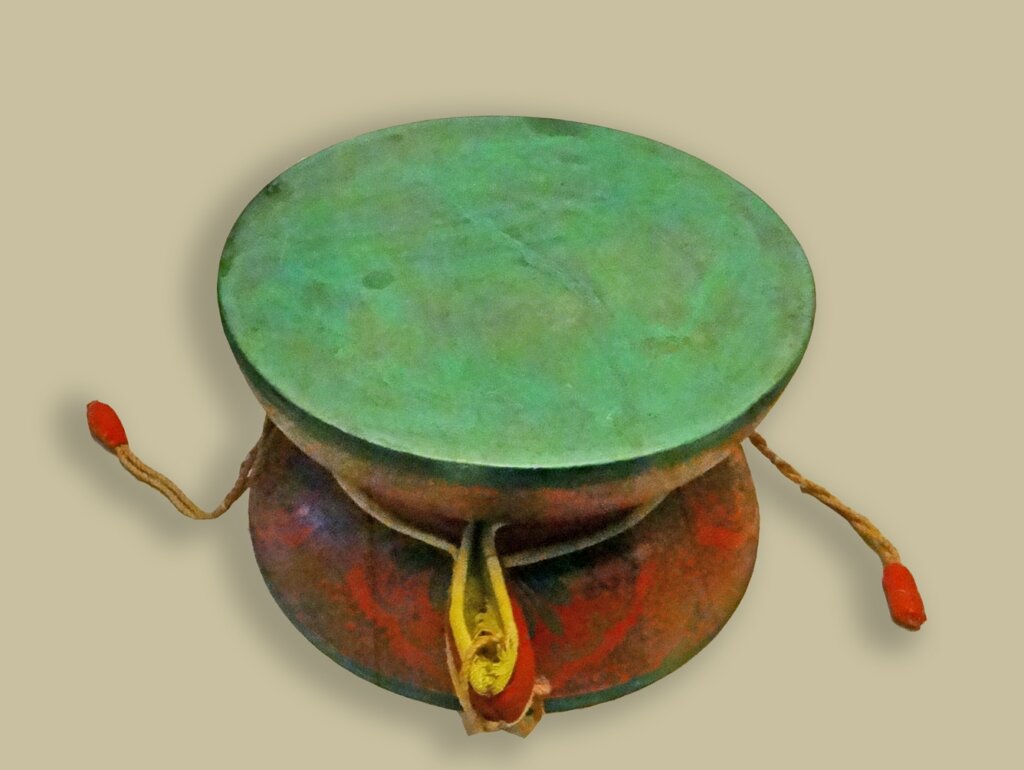
Chöd or Kusali Accumulations
In Cascading Waterfall of Nectar, Thinley Norbu Rinpoche quotes lines from the Dudjom Tersar and then explains them:
Now, my body, wealth, and the source of my virtue of all my lives I give without clinging to all sentient beings, who have all been my mother. May great waves of benefit be accomplished without obstacle for all sentient beings. Thus, these three lines illuminate the meaning that from beginningless lives until the present lifetime, although innumerable bodies have been taken, they have all only added to the causes and results of further suffering. Moreover, there has not been benefit, even of the size of a sesame seed. Therefore, now, in order to make this cherished precious body meaningful, one should imagine that inexhaustible clouds of offerings radiate from one’s body, upwardly presenting offerings to the exalted guests, who are the Three Jewels and the Protectors of Qualities. Generosity is presented as clouds of gifts to the lower guests of compassion, the sentient beings of the six realms and the guests who are owed unpaid karmic debts. Not only that, whatever is owned, including all of one’s possessions and wealth, as well as the root of all virtue accumulated throughout the three times, is given without clinging to all kind parent sentient beings who have been my mother.
All sentient beings are placed in the state of gods or human beings as the support for the stages of the path and are led to holy Dharma, and that path to liberation is according to their energy and faculties. The result of the path is to be placed in the state of enlightenment. Then, just as previous Buddhas and Bodhisattvas of the past have accomplished great waves of benefit for all sentient beings, likewise, in accord with their activities, “I wish and pray to accomplish just like Buddhas who have the ten powers. Help me accomplish unobstructed benefit by following your example, fulfilling the aims and desires of all beings.”
Thinley Norbu Rinpoche's son, Dzongsar Khyentse Rinpoche, has this to say in Not for Happiness:
"Kusali practice is not included in many ngöndro traditions, but you will find it in the long version of the Longchen Nyingtik Ngöndro. It’s not a bad idea for those following the shorter version to practise it too, because it is an excellent method for accumulating merit. Kusali practice is recommended for practitioners who are poor and cannot afford mandala plates, offerings or any of the necessary special offering substances, and as Patrul Rinpoche points out, kusali literally means “beggar.” Yet, from the dharma point of view, it ranks amongst the highest teachings."
A wonderful overview of all the elements and how they vary across the four main traditions is included in the beginning of Torch of Certainty. The translator Judith Hanson interviewed Kalu Rinpoche, Dezhung Rinpoche, and Chogyam Trungpa Rinpoche. She conducted the interviews separately, but reading it, it is hard not to smile, imagining them all in the same room discussing these topics.
Some of their discussion will appear in the following pages, but let us now dive into one of the most widely practiced ngondros, that of the Longchen Nyingtik of the Nyingma tradition.