A Series of Articles on Ngöndro
3. The Nyingma Traditiona

All the Nyingma tradition's ngöndros are rooted in the teachings of Guru Rinpoche, who planted them in the minds of his disciples, who, in subsequent rebirths, have revealed different cycles of teachings.
The Longchen Nyingtik tradition was received by the great Jigme Lingpa directly from Longchenpa in a series of visions. This is a complete path of Vajrayana culminating in Dzogchen.
The Longchen Nyingtik was strong throughout its history, but it was with Patrul Rinpoche's explanation of how to practice it, the Kunzang Lama’i Shelung or Words of My Perfect Teacher, that it became immensely popular and practiced and studied widely across the Nyingma tradition and beyond.
The Dalai Lama had this to say about the text:
"It is said in the Great Perfection teachings that one cannot become enlightened through a contrived mind; rather, the basic mind is to be identified, in relation to which all phenomena are to be understood as the sport of the mind. One then familiarises oneself continuously and one-pointedly with this ascertainment. However, to have a full understanding of this it is not sufficient merely to read books; one needs the full preparatory practice of the Nyingma system and, in addition, the special teaching of a qualified Nyingma master as well as his blessings."

$34.95 - Paperback
Guide to the Words of My Perfect Teacher
While Patrul Rinpoche's text is currently published in English by Yale University Press due to the vagaries of the publishing business, we do publish the renowned commentary on Patrul Rinpoche's text by the great master Khenpo Ngawang Pelzang, also known as Khenpo Ngakchung. The author was a student of Patrul Rinpoche's main disciple, Nyoshul Lungtok Tenpai Nyima.
The translator's introduction presents a clear differentiation of how the Guide relates to Patrul Rinpoche's text:
"While the Kunzang Lama’i Shelung serves above all as a source of inspiration, Khenpo Ngakchung’s text provides students with the theoretical background that serves as an essential foundation for the practice. To cite a few examples, where Patrul Rinpoche exhorts us in the chapter on refuge to have confidence in the Three Jewels, Khenpo Ngakchung in the corresponding chapter of his Zintri gives a detailed and lengthy description of the Three Jewels. In the chapter on bodhichitta, he provides an introduction to Madhyamika philosophy that is the basis of transcendent wisdom: an understanding of this is essential for anyone attempting to practice the Great Perfection. Patrul Rinpoche’s insistence on the sincerity of one’s confession in the Vajrasattva chapter is complemented by Khenpo Ngakchung’s explanation of why negative actions hinder our progress on the path, together with an invaluable checklist of the negative actions one might need to confess.
In the chapters on impermanence and the mandala offering, the Zintri completes Patrul Rinpoche’s description of the Buddhist cosmology with a startling vision of the universe that forces us to revise our usual notions of time and space. And in the guru yoga chapter, the author compares the role of the teacher in the different vehicles, showing why the guru has such an important place in the practice of the Great Perfection."

$19.95 - Paperback
Not for Happiness: A Guide to the So-Called Preliminary Practices
In his characteristic, refreshing style, Dzongsar Khyentse Rinpoche—the grandson of Dudjom Rinpoche, son of Thinley Norbu Rinpoche, and rebirth of Jamyang Khyentse Chokyi Lodro—presents an explanation of ngöndro practice that is extremely practical and clear.
About the Longchen Nyingtik preliminary practices, he has this to say:
"It is well known as a “preliminary” practice, yet contains some of the most profound language in Buddhadharma. Words such as prana, bindu and nadi appear right at the beginning of the text and are repeated over and over throughout. The mahasandhi or dzogchen tradition is the great inspiration behind the Longchen Nyingtik Ngöndro and includes some of the most ancient and direct wisdom teachings in Tibetan Buddhism. In guru yoga practice, for example, the section on empowerment includes references to the four stages of a vidyadhara, and for many, merely to read the names of the vidyadharas is extremely encouraging.
However mind-boggling these concepts may initially appear to a beginner, they are not saved until the end of the path, but introduced right at the beginning, at ngöndro level, to help students become familiar with both the terms and the radical ideas behind them. Devoted, diligent practitioners are likely to repeat such words daily for ten or perhaps twenty years before gradually discovering, with great joy, the profound meaning they represent.
The word bodhichitta, for example, is familiar to most dharma practitioners. Most of us are fairly sure that it has something to do with the good, kind thoughts we try to instill in our minds, but in reality the true meaning of bodhichitta will only emerge after many, many years of practice."

$29.95 - Paperback
Heart Essence: Foundational Practices and the Transmission of the Longchen Nyingthig
by Anne Klein
This compilation of texts includes the story, history, music, and commentaries to help practitioners more fully understand the elements of the practice. With translations of the texts alongside their original Tibetan counterparts, this treasury of materials gives readers the opportunity to explore these beloved teachings in depth.
Part One
- Heart Essence, the Vast Expanse by Rigzin Jigme Lingpa
- Wondrously One: Jigme Lingpa’s Heart Essence for Chanting
Part Two
- Spontaneous Meeting: Adzom Paylo Rinpoche and the Essence Beloved by Dakinis
- Great Bliss Blazing for Chanting by Mipham Rinpoche
- Condensed Heart Essence: A Close and Excellent Path to Enlightenment by Adzom Paylo Rinpoche
- Waves of Splendor: Adzom Rinpoche’s Condensed Heart Essence for Chanting
- Threefold Epilogue by Khetsun Sangpo Rinpoche
Part Three
- This section contains the original Tibetan of several of these texts.

$22.95 - Paperback
Entrance to the Great Perfection: A Guide to the Dzogchen Preliminary Practices
Entrance to the Great Perfection is a collection of teachings on ngöndro put together by Cortland Dahl and includes the following:
- Two texts by Jigme Lingpa
- How to Practice: Instructions on the Common Great Perfection Preliminaries of the Heart Essence of the Vast Expanse
- The Application of Mindfulness: Instructions on the Unique Great Perfection Preliminaries of the Heart Essence of the Vast Expanse
- How to Practice: Instructions on the Common Great Perfection Preliminaries of the Heart Essence of the Vast Expanse
- Dzongsar Jamyang Khyentse Rinpoche's Advice on the Longchen Nyingtik Preliminary Practices
- Jigme Thinley Ozer's Thee Sublime Path to Omniscience: A Liturgy for the Preliminary Practices of the Heart Essence of the Vast Expanse
- Two texts by Jamyang Khyentse Wangpo:
- The Quintessential Nectar of the Profound Meaning: A Concise Explanation of the Great Perfection Preliminary Practices of the Heart Essence of the Vast Expanse
- The Sublime Path to Enlightenment: A Concise Liturgy for the Longchen Nyingtik Preliminary Practices
- The Quintessential Nectar of the Profound Meaning: A Concise Explanation of the Great Perfection Preliminary Practices of the Heart Essence of the Vast Expanse
- Excerpts from Kunkhyen Tenpe Nyima's Notes on the Development Stage instructing the reader how to visualize.
- An overview of what a three year retreat is like in the Longchen Nyingtik lineage as taught by Chatral Rinpoche. This includes what the curriculum encompasses and the daily schedule.
- An overview of the Fourfould Heart Essence or Nyingtik Yabshi which contains five sections:
- The Heart Essence of Vimalamitra (Vima Nyingtik)
- The Heart Essence of the Dakinis (Khandro Nyingtik)
- The Guru’s Quintessence (Lama Yangtik)
This is Longchenpa's commentaries on Vimalamitra’s teachings - The Quintessence of the Dakinis (Khandro Yangtik)
This is Longchenpa's clarifications of the Heart Essence of the Dakinis
- The Profound Quintessence (Zabmo Yangtik).
This is Longchenpas teachings on the Lama Yangtik and Khandro Nyingtik together
- The Heart Essence of Vimalamitra (Vima Nyingtik)
- An overview of the nine yanas

$23.95 - Paperback
Enlightened Journey: Buddhist Practice as Daily Life
Tulku Thondup Rinpoche devotes a long chapter in this classic to the presentation of ngöndro. He includes the following on the practice of Guru Yoga:

$24.95 - Paperback
Tantric Practice in Nyingma
Khetsun Sangpo Rinpoche gave these teachings on several occasions in the 1970s, and they were translated by Jeffrey Hopkins and published in 1982 . The bulk of it is on the Longchen Nyingtik's ngöndro, with a short section at the end that discusses some practices for which ngöndro is the basis.
$24.95 - Paperback
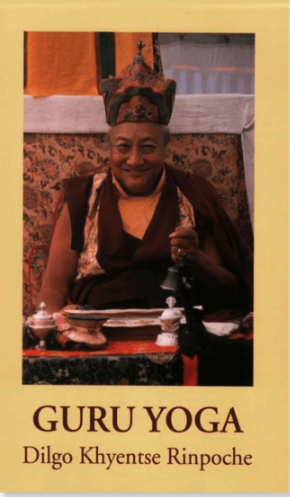
Guru Yoga: According to the Preliminary Practice of Longchen Nyingtik.
Guru Yoga provides a distinct take on the practice and includes some brief contributions by Dzongsar Khyentse, Dzigar Kongtrul, and Tsikey Chokling.
Next, we go to a sibling tradition of the Lonchen Nyingtik, that of the Dudjom Tersar.