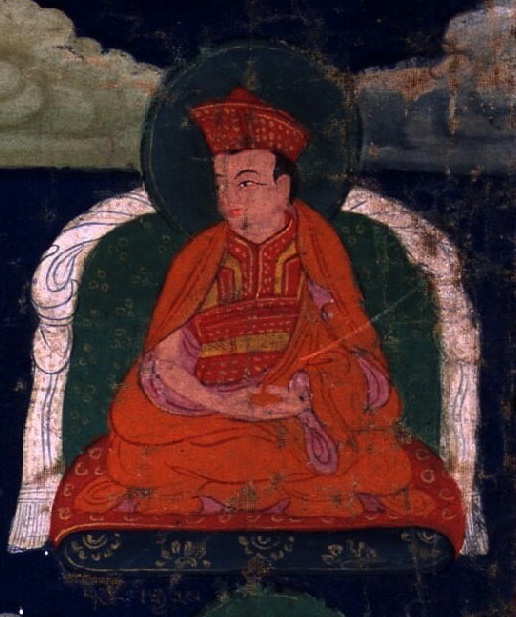
www.treasuryoflives.org, Public domain, via Wikimedia Commons

The Drukpa Kagyu traditionis one of the eight Kagyu lineages that stem from Pakmodrupa (1110-1170).  Pakmodrupa's disciple Lingje Repa (1128-1188, considered a previous life of Dudjom Rinpoche) transmitted his particular set of teachings to Tsangpa Gyare, (1161–1211, considered an incarnation of Naropa) who formally founded the Drukpa based in Linje Repa's teachings.  Tsangpa Gyare then transmitted it to three of main disciples:

Sanggye Onchen Repa (1177–1237), who founded the Bar-Druk (Middle Drukpa) branch of the lineage. 

Gyalwa Götsangpa Gönpo Dorje (1189–1258), who founded the Tor-Druk (Upper) branch.  Shambhala Publications will publish a new collection by Gotsangpa in 2027. 

Gyalwa Lorepa Wangchuk Tsöndru (1187–1250), also known as Lore Darma Wangchuk,  who founded the (Lower) branch. 

While the teachings of the three branches did not vary much, over time the Upper and Lower Drukpa were gathered back into the Middle/Central Drukpa. Today, the Drukpa Kagyu, including the Gyalwang Drukpa lineage,and the Bhutanese Drukpa school, is generally regarded as the continuation of this synthesized Bar-Druk / Middle Drukpa and is divided into the Northern and Southern branches. 

Key Tulku Lineages

There are multiple important rebirth lineages within the Drukpa Kagyu.


The Gyalwa Drukpa, or Drukchen Lineage
This is a very important  incarnation line given that the tradition's founder, Tsangpa Gyare, was the first.  The second recognized tulku in this lineage came two hundred years later, Kungpa Paljor (1428-1476) and the fourth was Pema Karpo (1527-1592), both of whom are included in The Supreme Siddhi of Mahamudra below.  The current Drukchen is the twelfth, Jikmé Pema Wangchen (born 1963).


The Khamtrul Lineage
The Khamtrul Rinpoche lineage began with Khampa Karma Tenphel (1569-1637), was based at the famous Khampagar monastery in Kham, but is now at Tashi Jong in Himachel Pradesh in India.  We publish two extraordinary volumes by the Third Khamtrul Rinpoche, Ngawang Kunga Tenzin (1680-1728), detailed below.


The Zhabdrung Lineage
Sometimes written as Shabdrung,  this lineage began with Ngawang Namgyal (1594–1651), who unified Bhutan and is the subject of Ascent of the Thunder Dragon below.


Other important tulku lineages include the Drukpa Yongdzin and Choegon Rinpoche incarnation lines.


There are also the Je Khenpos, which are not a tulku lineage but are appointed as the heads of the Drukpa tradition in Bhutan. 

tok 8.4

$59.95 - Hardcover

Jamgon Kongtrul on the Drukpa Kagyu

The following is from The Treasury of Knowledge: Esoteric Instructions (Book VIII, Part 4). The extensive endnotes explaining much of this are not included here.

The basis for the famous name “Glorious Drukpa” came from the dharma lord Tsangpa Gyarepa. He taught three cycles of mahamudra: the Cycle of Words of Explanation, the Cycle of Instructions for Practice, and the Cycle of Blessings for Realization. There were six cycles of vital points on the path of method: the Cycle of Vital Points of Mixing and Transferring in the Six Dharmas, the Cycle of Mentally Striking Down Livelihood, the Cycle of Pervasive Engagement and Rejection, the Cycle of Actualizing Realization, the Cycle of Vital Oral Instructions, and the Cycle of Making Concepts the Path and Expelling Disease. In the teachings of Equal Taste, there is the Treasure Treasury with Sealed Command, The Further Treasury, Mind’s Mirror, and the Secret Treasury, Opening the Hidden Eye. [Tsangpa Gyaré said,] “Interdependent relation is our system.” He opened up and explained all of the chariot traditions of the profound path of great devotion.

The Eight Great Guidances of the Upper Drukpa are (1) Guidance on the Profound Path of Devotion, (2) Guidance on the Joined Coemergent Mahamudra›, (3) Guidance on the Special Path of Methods, (4) Guidance on the Reverse Meditation on Secret Conduct, (5) Guidance on Training in Pure Realms of Sacred Outlook, (6) Guidance on Suppressing the Eight Worldly Concerns, (7) Guidance on Love and Compassion, and (8) Guidance on Causality and Interdependence.

The second helper of the doctrine of Upper Drukpa was Gyalwa Yangönpa. He composed the Mountain Dharma Trilogy consisting of the Cycle of Origination that teaches the necessity of all the practice teachings to accomplish, the Cycle of Hidden Explanation that clearly teaches the abiding nature of the vajra body, and the Cycle of Liberation from the Treacherous Path of the Intermediate State that brings death onto the path. The first is the root, like the body, that is the three dharmas.

The extensions, like the limbs, are the nine dharmas. The profound meaning, like the heart, is the six dharmas. The cherished, like the life force, is the six dharmas. The red instruction, like the five senses, is the five dharmas, and so forth. 

In the notes on the six dharmas by Barap Gyaltsen Zangpo that were augmented by Jamyang Chökyi Drakpa in the Trilogy of Great Bliss there are instructions for the paths of both instantaneous realizers and gradual realizers.

The Five Capabilities of the Lower Drukpa consists of five instructions: Mahamudra Death Capability, Inner Heat Cotton Capability, Secret Conduct Mountain Capability, Disease and Spirit Disturbance Capability, and Antidote Condition Capability.

marpa

$49.95 - Hardcover

The Drukpa Kagyu in the Treasury of Precious Instructions

In the first Marpa volume of this 18 volume treasury (there will be four total volumes from the Marpa Kagyu), there is some interesting context on how the Drukpa teachings cohered.  There is much else on the Drukpa Kagyu in this and subsequent volumes. 

The Drukpa Kagyu tradition and the Drukchen incarnation line have a special connection with Rechungpa that begins with the founder of the Drukpa Kagyu, Ling Repa (1128–88). Prior to becoming a student of Pakmo Drupa, Ling Repa was a student of Rechungpa’s students Khyung Tsangpa and Sumpa Repa. Ling Repa’s main student was Tsangpa Gyare (the first Drukchen and considered to be an incarnation of Nāropa), who, in addition to receiving teachings in Rechungpa’s tradition from Ling Repa, discovered teachings concealed by Rechungpa called the Six Cycles of Equalizing Tastes (Ro snyoms skor drug).17 The third Drukchen, Jamyang Chökyi Drakpa, had visions of Rechungpa and compiled the teachings he received in that direct transmission into the New Rechung Aural Transmission Collection. He also compiled the Saṃvara Aural Transmission Texts19 and wrote the Fire Cakra: The Skull-Cup Abhiṣeka from the Saṃvara Aural Transmission, which is clearly a basis for Jamgön Kongtrul’s Arousing the Forces of Bliss and Heat.

$24.95 - Hardcover

The Supreme Siddhi of Mahamudra: Teachings, Poems, and Songs of the Drukpa Kagyu Lineage

The teachings found here are sources of inspiration for any student wishing to genuinely connect with this tradition.

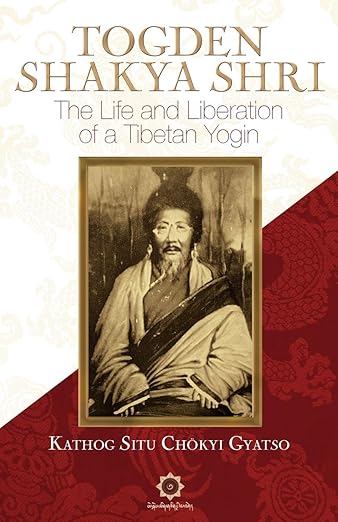
These translations include Mahamudra advice and songs of realization from the root of the Kagyu tradition including Tilopa, Naropa, Marpa, Milarepa, and Gampopa.  It also has teachings from Lingje Repa, Tsangpa Gyare, the Second Drukchen Kunga Paljor, Drukpa Kunleg, Pema Karpo, Tsele Natsok Rangdrol, the Third Khamtrul Rinpoche Ngawang Kunga Tenzin, Togden Shaya Shri, the Eighth Khamtrul Rinpoche. and Adeu Rinpoche. This collection of direct pith instructions and meditation advice also includes an overview of the tradition by Tsoknyi Rinpoche.

Combined with guidance from a qualified teacher, these teachings offer techniques for resting in the naturally pure and luminous state of our minds. As these masters make clear, through stabilizing the meditative experiences of bliss, clarity, and nonthought, we will be liberated from suffering in this very life and will therefore be able to benefit countless beings.

Royal Seal Vol 1

$24.95 - Hardcover

royal seal 2

$39.95 - Hardcover

The Royal Seal of Mahamudra: A Guidebook for the Realization of Coemergence
Volume I and Volume II

This guidebook for cultivating the meditative practices of stability and insight—the first major work from the Drukpa Kagyu lineage to become available in English—stands out among works of its kind as one of the clearest and most comprehensive presentations of coemergence, or mahamudra. In it, the eighteenth-century Tibetan master Ngawang Kunga Tenzin, the Third Khamtrul Rinpoche, details a step-by-step program of spiritual exercises that bring the meditator directly to clear realization of the fully perfect, ever-present, nondual nature of mind.

Beginning with the close relationship between phenomena and mind and the immense benefits of meditating on the nature of mind, the Third Khamtrul Rinpoche offers careful instructions on the four yogas of mahamudra together with advice on how to recognize genuine progress and how to remove obstacles that arise during meditation. Characteristic of the Drukpa Kagyu approach is that, even from the earliest stages of training, the author explains how all experience, thoughts, and perceptions may be used as the path to enlightenment from the perspective of insight into the nature of mind.

This second and final volume outlines how mahamudra is pointed out and cultivated, how to overcome obstacles to meditation, and how buddhahood is ultimately attained. Refreshingly readable and pithy, these classic teachings are a source of inspiration for practitioners and anyone wishing to learn about the tradition of mahamudra.

Translator Gerardo Abboud Discusses The Royal Seal of Mahamudra

Ascent of the Thunder Dragon

$24.95 - Paperback

Audiobook Available

Ascent of the Thunder Dragon audiobook cover

Ascent of the Thunder Dragon: The Surprising Spiritual Life and Legacy of Bhutan’s Founder

Sasha Wakefield intertwines the life and legacy of Zhabdrung Ngawang Namgyal (1594–1651) with her own personal spiritual journey as she explores Bhutan’s rich history.

The seventeenth century was a pivotal time for the tiny but culturally vibrant kingdom of Bhutan—marked especially by the life of the influential political and spiritual leader Zhabdrung Ngawang Namgyal (1594–1651), including his remarkable past lives. Sasha Wakefield traces the life and profound spiritual accomplishment of this master in the context of her own spiritual journey from Australia to Bhutan. While unveiling the cultural and spiritual landscape of Bhutan, Wakefield delves into the fundamental Buddhist concepts of reincarnation, karma, bodhisattvas, buddhas, and enlightenment to underscore the significance of Zhabdrung’s spiritual attainment, including reaching the tenth bhumi, or level, of a bodhisattva, and deliberately choosing his own rebirth.

During Zhabdrung’s time as early nation-builder of the kingdom and state of Bhutan, he faced adversity and attacks from adversaries but responded with meditation, diplomacy, and unwavering commitment to serve the people of Bhutan. Wakefield shows the nature of ritual and ceremony that are inherent in the history of the Bhutanese state, weaving in the verse texts of liturgies and praises for the offering ceremonies and consecrations that were central to establishing the Drukpa Kargyu Buddhist lineage in Bhutan and establishing Bhutan as a sovereign land.

Author Sasha Wakefield Discusses the Book

$24.95 - Paperback

Tales of a Mad Yogi: The Life and Wild Wisdom of Drukpa Kunley

by Elizabeth Monson

The fifteenth-century Himalayan saint Drukpa Kunley is a beloved figure throughout Tibet, Bhutan, and Nepal, known both for his profound mastery of Buddhist practice as well as his highly unconventional and often humorous behavior. Ever the proverbial trickster and “crazy wisdom” yogi, his outward appearance and conduct of carousing, philandering, and breaking social norms is understood to be a means to rouse ordinary people out of habitual ways of thinking that leads them toward spiritual awakening.

Elizabeth Monson has spent decades traveling throughout the Himalayas, retracing Drukpa Kunley’s steps and translating his works. In this creative telling, she has reimagined his life based on historical accounts, autobiographical sketches, folktales, and first-hand ethnographic research. The result, with flourishes of magical encounters and references to his superhuman capacities, is a poignant narrative of Kunley’s life, revealing to the reader the quintessential example of the capacity of Buddhism to skillfully bring people to liberation.

"A literary gem—reimagining the elusive Drukpa Kunley, based on exacting research and blended with lucid translations. Elizabeth Monson gives narrative flesh to the bare biographical bones found in his collected writings. The ‘mad saint’ comes to life, ever the social critic but more human and profound than in the folktales previously available in English."
—Holly Gayley, associate professor of Buddhist Studies at the University of Colorado, Boulder

Liz Monson Discusses the Book

$22.95 - Paperback

Gypsy Gossip and Other Advice

Gypsy Gossip is an extraordinary book from one of the greatest masters of our time, Thinley Norbu Rinpoche, the son of Dudjom Rinpoche and father of Dzongsar Khyentse Rinpoche, who had deep ties to Bhutan and is much revered there.

One of the pieces in this collection is "A Message for Young Bhutanese", and there is specific advice for Bhutanese to keep in their hearts, though of course much of the advice Rinpoche imparts is universal, for us all.

From Gypsy Gossip:

"Although Bhutan is a tiny country, it is blessed by Guru Rinpoche to be a pure Dharma country, which was further established by many sublime beings, including Phajo Drugom Shigpo,24 Omniscient Longchenpa, Pema Lingpa, and Shabtrung Rinpoche, all of whom did not discriminate between Old School (Nyingma) and New School (Sarma) traditions but taught to keep faith in Guru Rinpoche unshakably. From this great legacy, Bhutan is one of the most stable places in which pure Dharma traditions have been maintained. If religious leaders follow whatever traditions flourished previously in the same way, it will be very uncomplicated and much more beneficial for all. It will not cause contradiction between Nyingma and Drukpa Kagyu, but will continue the recognition of Guru Rinpoche as being not only for Bhutan, but the sole wisdom emanation of Buddha Shakyamuni and the protector of the entire world, including the people of Bhutan. I cannot say what the karma of the younger generation in Bhutan will be in the future, but it is certain that it is much better for Bhutanese to encourage Buddhism to flourish than to ignore it, for the benefit of all beings, including Bhutanese."

Jetsunma Tenzin Palmo

Jetsunma Tenzin Palmo

Jetsunma Tenzin Palmo was trained in the Drukpa Kagyu tradition and it and some of the figures come up in many of her books and audiobooks including those below:

The Heroic Heart

$18.95 - Paperback

By: Jetsunma Tenzin Palmo

Into the Heart of Life

$21.95 - Paperback

By: Jetsunma Tenzin Palmo

Divine Messengers

$18.95 - Paperback

Divine Messengers: The Untold Story of Bhutan’s Female Shamans

by Stephanie Guyer-Stevens and Francoise Pommaret

As mystics, healers, and travelers to the netherworld, female shamans continue to impact the spiritual lives of the Bhutanese. These divine messengers act as mediums for local spirits, cure diseases through prayer, and travel to the realm of the dead. They are sometimes referred to as “sky-goers,” “reincarnations,” or “returners from the beyond,” and their stories are intimately connected with the Buddhist ideas of karma and rebirth.  Given the women profiled are all Bhutanese, unsurprisingly the Drukpa Kagyu is mentioned  multiple times. 

"I love and admire the book and the great work both Françoise and Stephanie did in tracking down and relating with all the khandroms and deloms and divine messengers all over Bhutan, and the clear and sensitive thought and writing that went into the fascinating book. . . . Just amazing."
—Robert Thurman

Additional Resources

rigpa wiki logo

The Treasury of Lives has excellent resources on the people, tradition, and institutions of the Drukpa Kagyu.

lotswa house

Other Books

Two other superb books we wish to recommend are:

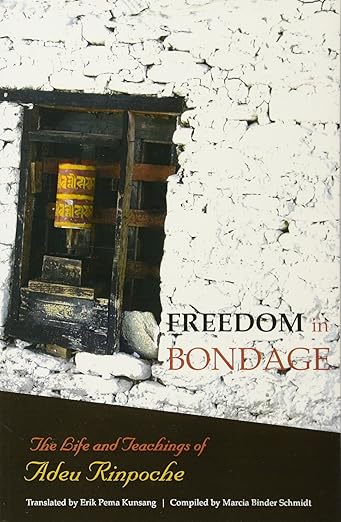
Freedom In Bondage

by Adeu Rinpoche and Tsoknyi Rinpoche