Related to Theravada Buddhism: Insight Meditation | Southeast Asian Buddhism | Thai Forest Traditions | Theravada Buddhism
More in Buddhism: All Buddhism | Zen & Chan | Tibetan Buddhism | Taoism | Explore by Topic

Related to Theravada Buddhism: Insight Meditation | Southeast Asian Buddhism | Thai Forest Traditions | Theravada Buddhism
More in Buddhism: All Buddhism | Zen & Chan | Tibetan Buddhism | Taoism | Explore by Topic
Over the past few years we at Shambhala Publications have been focused on bringing the depth and richness of the traditions of Theravada Buddhism more into the light. Modernist and secularizing processes have been the lens through which many see "Theravada". A consequence of this is that some people's understanding of the traditions it encompasses are often either oversimplified ("it's Insight Meditation with a lot of the cultural paraphernalia"), incomplete ("Its vipassana as taught in Thai temples"), or incorrect ("it's for one's own liberation only"). These biases mean many miss out on the full story which is that the highly varied practices and teachings form a vast, creative, and immensely powerful tradition for transforming the mind and gaining liberation. Here are some of our books, recent as well as classics, that explore some of these topics.
Lots more books are on the way!
A rich compilation of teachings from revered Buddhist masters in Thailand’s deep Theravada tradition.
Accessible, inspiring, and readily applicable to contemporary life and meditation practice, this collection reveals Thai Buddhism to be a no-nonsense, practical spiritual path with an emphasis on personal experience, mindfulness, ethical conduct, and confronting the roots of one’s suffering head-on. Bruce Evans presents Dhamma teachings from six of modern Thailand’s great masters, skillfully conveying the unique voices of Chao Khun Upālī, Ajahn Buddhadāsa, Bhikkhu P. A. Payutto, Upāsikā Kee Nanayon, Ajahn Pramote, and Ajahn Paisal. Also included are Evans’s recollections of his monastic training as a young man with Ajahn Chah—one of modern Thailand’s most renowned Buddhist teachers—and an alternative version of a canonical Buddhist text, the Girimānanda Sutta, that was circulated in Thailand via palm-leaf manuscript. Spanning the twentieth and twenty-first centuries, Voices of Siam takes readers directly into the heart of Thai Buddhist thought and practice.
“From Bruce Evans’s engagingly vivid account of his experiences as a young monk with Ajahn Chah, to a new translation of a Thai version of the Girimānanda Sutta, to contributions from Ajahn Buddhadāsa, Bhikkhu Payutto, and, unusually, a laywoman, Upāsikā Kee Nanayon, this anthology opens windows on Thai Buddhist traditions, their meditative life, and their practices. It introduces the interpretative wisdom and surprising humor that often characterize Thai Dhamma teachers. As Evans points out, the different “flavors” of the different teachers represented show us how different they all are in character and tone. All, however, bear the unmistakable stamp of a simple and direct approach to Buddhist practice. This accessible book offers a richly humane introduction to Thai Buddhism and its meditative understandings.”
—Sarah Shaw, author of Breathing Mindfulness and The Art of Listening
An in-depth examination of the Samma Araham tradition, a distinctive Theravada Buddhist meditation system that emphasizes visualization, mantra, and the discovery of the spiritual bodies within us.
Discovered in a vision by the monk Luang Pho Sot Candasaro in 1916, Samma Araham is a thriving meditation tradition in its native Thailand, but little understood in the West. In this fascinating overview, Jak Cholvijarn weaves together Candasaro’s life story, the historical context that shaped his influential teachings, and the enduring legacy of the Samma Araham meditation system that he established. Drawing on Candasaro’s own writings and sermons, Cholvijarn presents the entire Samma Araham meditation system in all its intricate detail, demonstrating how the practice incorporates elements of both canonical Buddhist texts like the Satipatthana Sutta, as well as the regional boran kammatthana or “old meditation” practices that once thrived in Southeast Asia. Detailed descriptions of the meditative journey into a series of eighteen “inner bodies,” each corresponding to different levels of Buddhist teaching reveal a colorful, mystical side of the Theravada tradition that has gone underappreciated in the age of mindfulness and insight meditation.
"Seeing the Bodies Within brings to life and contextualizes the origins of one of the most significant meditation traditions of the modern world, the globally practiced sammā arahaṃ, or vijjā dhammakāya, method of Venerable Sot Candasaro (1884–1959). Cholvijarn’s book is important not only in explaining Sot’s innovative drawing together of traditional, esoteric Thai practices (boran kammaṭṭhāna) with canonical sources such as the Mahāsatipaṭṭhāna Sutta, but also in tracing the diversity of Thai meditation practice on the cusp of modernity, as well as the subsequent developments that shaped how Theravada meditation is practiced today."
—Kate Crosby, author of Esoteric Theravada and Numata Professor of Buddhist Studies, University of Oxford
Whether you practice vipassana, samatha, or any type practice that develops concentration, this book will be a revelation. “Breathing Mindfulness” meditation is a cornerstone of Buddhist practice, believed to be key to the Buddha’s own enlightenment. This powerful technique fosters a harmonious blend of awareness and tranquility, guiding practitioners toward profound meditative states and deeper wisdom. Yet, even among those who practice one strand or another of this practice, there is a treasure trove of variety and richness to discover.
Oxford University scholar and practitioner Sarah Shaw guides readers through the history and contemporary interpretations of breathing mindfulness, emphasizing the Pali or Southern tradition of Buddhism. In this in-depth study, she examines:
Shaw’s exploration reveals the enduring legacy of this practice, from its ancient origins to its contemporary resurgence, and how this might be applicable in your own practice.
"Drawing on Buddhist texts, field research, and interviews, this is a fascinating overview of the numerous interlocking ways in which the practice of mindfulness of breathing (ānāpānasati) has developed and thrived. The image of an ancient, life-rich forest is used to illustrate this richness of ways of working with the breath, from ancient India to Southeast Asia and Sri Lanka of recent centuries and, more recently, in the West. Key ancient texts are explored on the understanding of the 16 stages of ānāpānasati and on how they are used to support both samatha and vipassanā: deep calm and incisive insight. The use of ānāpānasati in Southeast Asia is shown to vary from the “dry” insight practices first championed in Myanmar in the nineteenth century—Shaw explores, for example, older traditions drawing on yantras and related chants, as well the Thai forest tradition, where breath meditation is drawn on alongside a strong adherence to Vinaya (Buddhist monastic training). The book helps practitioners of one style of ānāpānasati to locate their practice within a wider tradition, and scholars to see the potent variety of this practice."
—Peter Harvey, author of An Introduction to Buddhism and Professor Emeritus of Buddhist Studies at the University of Sunderlan
An abridged translation of one of the most important books on Theravada Buddhism in recent history—authored by the esteemed Thai monk P. A. Payutto.
First published in Thailand in 1971 and since then expanded and revised multiple times, Bhikkhu P. A. Payutto’s Buddhadhamma is widely considered to be one of the most significant scholarly works on the Buddhism of the Pali canon produced in the last century. In this abridged translation, Bruce Evans presents the core of Ven. Payutto’s monumental scholarship, creating an ideal manual for anyone walking or studying the Theravada Buddhist path. Within are discussions of unparalleled sophistication on such foundational Buddhist teachings as the five khandhas, dependent arising, kamma, the noble eightfold path, spiritual friendship, wise attention, the four noble truths, the nature of enlightenment, and more.
Replete with passages from the ancient Pali suttas, Payutto frames Buddhist teachings in terms of broad existential questions that all of us face, such as “What is life?” and “How should life be lived?” Payutto’s illuminating expertise shows Theravada Buddhism to be a thorough explication of how reality unfolds according to natural processes—as well as a way of life that can yield the highest form of happiness.
"For many centuries in the Southern Buddhist world, Buddhaghosa’s Visuddhimagga was the go-to text for a compendium of Buddhist teachings and an exegesis of the Pali canon. In the current age, Ven. P. A. Payutto’s magnificent and comprehensive Buddhadhamma has begun to replace that venerable text, analyzing and explaining the essential teachings of the Buddha and making them accessible for a contemporary readership. This new publication, The Essential Buddhadhamma, is a somewhat condensed version of the original treatise, ably presented by Bruce Evans. I cannot recommend it too highly, as it contains the core Buddhist teachings of the Pali canon in a wonderfully systematic and practical format. Anyone interested in understanding the Theravadin view of life and Buddhist practice will be blessed with a treasure trove of teachings if they delve into this book and explore its myriad elucidations."
—Ajahn Amaro, abbot of Amaravati Monastery
An illuminating introduction to the contemporary world of Theravada Buddhism and its rich culture and practices in modern mainland Southeast Asia.
Theravada translates as “the way of the Elders,” indicating that this Buddhist tradition considers itself to be the most authoritative and pure. Tracing all the way back to the time of the Buddha, Theravada Buddhism is distinguished by canonical literature preserved in the Pali language, beliefs, and practices—and this literature is often specialized and academic in tone. By contrast, this book will serve as a foundational and accessible resource on Theravada Buddhism and the contemporary, lived world of its enduring tradition.
Brooke Schedneck has done extensive research on topics such as religions of Southeast Asia, contemporary Buddhism, gender in Asian religions, and religious tourism. Narrowing in on topics such as temples, monastic lives, lay Buddhists, meditation, and Buddhist objects, Schedneck highlights the thriving diversity of Theravada Buddhists today. Exploring Theravada as a lived religion reveals how people apply various expressions in everyday life. She presents to readers the most important practices and beliefs of Theravada Buddhists, illustrated through contemporary debates about what represents proper Theravada practice within Cambodia, Myanmar, Laos, and Thailand in the twenty-first century. Additionally, practical information is provided in appendices about what temples and practice centers readers can visit as well as a temple etiquette guide offering tips for being a respectful visitor. While academics will benefit from and appreciate this overview, the writing offers a refreshing introduction to a complex tradition for readers new to the subject.
Until Nirvana’s Time presents forty-five Dharma songs, whose soaring melodies have inspired Cambodian Buddhist communities for generations. Whether recited in daily prayers or all-night rituals, these poems speak to our deepest concerns—how to die, how to grieve, and how to repay the ones we love.
Introduced, translated, and contextualized by scholar and vocalist Trent Walker, this is the first collection of traditional Cambodian Buddhist literature available in English. Many of the poems have been transcribed from old cassette tapes or fragile bark-paper manuscripts that have never before been printed. A link to recordings of selected songs in English and Khmer accompanies the book.
An interdisciplinary deep dive into traditional Buddhist jhāna meditation and how it can transform our understanding of self and consciousness.
For centuries in Southeast Asia, oral yogāvacara (yoga practitioner) lineages kept traditional jhāna practices alive, but in the nineteenth and twentieth centuries, reforms in Theravāda Buddhism downplayed the importance of jhāna in favor of vipassanā (insight) meditation. Some began to consider the jhānas to be strictly the domain of monastics, unattainable in the context of modern lay life. In recent years, however, there has been a resurgence of interest in the jhānas, and as researcher Paul Dennison shows, the esoteric and sometimes “magical” pre-reform practices of Southeast Asia hold powerful potential for modern lay practitioners living in a more scientifically minded world. Drawing on traditional Buddhist doctrine, teachings from lesser-known meditation texts such as the Yogāvacara’s Manual, and findings from the first in-depth, peer-reviewed neuroscience study of jhāna meditation, Dennison unpacks this ancient practice in all its nuance while posing novel questions about perception, subjectivity, and the nature of enlightenment.

Drawing on a lifetime of research, scholar L. S. Cousins untangles the complex history of meditation practice from the traditions rooted in the Pali canon and commentarial literature. With authoritative explication of a range of Buddhist texts preserved primarily in the Pali language—canonical discourses, commentarial treatises, and rare meditation manuals—Cousins explores a multiplicity of meditation practices that have developed over the past two and a half millennia, from the jhāna (absorption) and vipassanā (insight) methods that constitute the core of modern Theravāda practice to lesser-known, esoteric practice lineages of Central and Southeast Asia that were nearly lost to history.
The Dīghanikāya or Long Discourses of the Buddha is one of the four major collections of teachings from the early period of Buddhism. Its thirty-four suttas (in Sanskrit, sutras) demonstrate remarkable breadth in both content and style, forming a comprehensive collection. The Art of Listening gives an introduction to the Dīghanikāya and demonstrates the historical, cultural, and spiritual insights that emerge when we view the Buddhist suttas as oral literature.
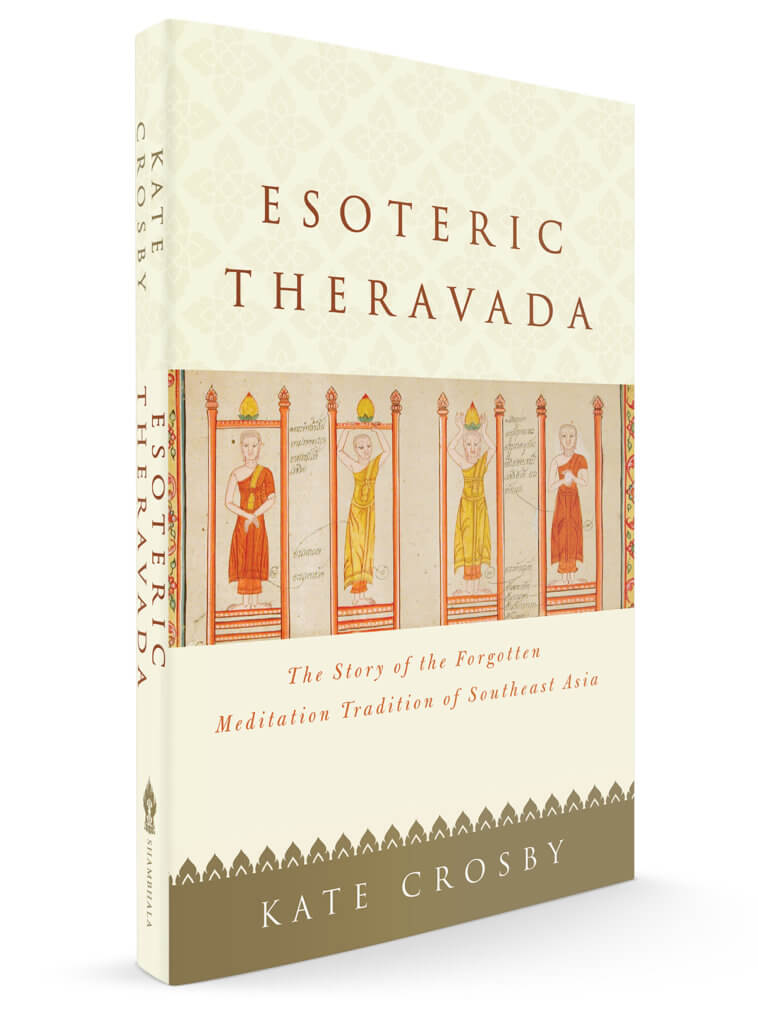
Theravada Buddhism, often understood as the school that most carefully preserved the practices taught by the Buddha, has undergone tremendous change over time. Prior to Western colonialism in Asia—which brought Western and modernist intellectual concerns, such as the separation of science and religion, to bear on Buddhism—there existed a tradition of embodied, esoteric, and culturally regional Theravada meditation practices. This once-dominant traditional meditation system, known as borān kammaṭṭhāna, is related to—yet remarkably distinct from—Vipassana and other Buddhist and secular mindfulness practices that would become the hallmark of Theravada Buddhism in the twentieth century. Drawing on a quarter century of research, scholar Kate Crosby offers the first holistic discussion of borān kammaṭṭhāna, illuminating the historical events and cultural processes by which the practice has been marginalized in the modern era.
In this comprehensive set of teachings, Buddhadasa Bhikkhu, perhaps the most influential Thai Buddhist of the twentieth century, introduces the Dhamma to lay practitioners in a relatable and powerful way. Beginning with an extensive discussion of spiritual practice and moving into specific teachings on Dhamma, this book will be an indispensable resource for Theravada Buddhists, Insight Meditation practitioners, and all readers interested in a profoundly committed modern approach to the Buddhist path.

$29.95 - Paperback
by Kamala Tiyavanich
This work ingeniously intermingles real-life stories about nineteenth- and early twentieth-century Buddhist monks in old Siam (today’s Thailand) with experiences recorded by their Western contemporaries. Stories of giant snakes, bandits, boatmen, midwives, and guardian spirits collectively portray a Buddhist culture in all its imaginative and geographical brilliance. By juxtaposing these eyewitness accounts, Kamala Tiyavanich presents a new and vivid picture of Buddhism as it was lived and of the natural environments in which the Buddha’s teachings were practiced.
Published in Thailand under the title The Buddha in the Jungle.

$24.95 - Paperback
By Chittadhar Hrdaya
Translated by Subarna Man Tuladhar and Todd Lewis
A translation of the modern Nepalese classic and winner of both the Toshihide Numata Book Award in Buddhism and the Khyentse Foundation Prize for Outstanding Translation.
This award-winning book contains the English translation of Sugata Saurabha (“The Sweet Fragrance of the Buddha”), an epic poem on the life and teachings of the Buddha. Chittadhar Hṛdaya, a master poet from Nepal, wrote this tour de force while imprisoned for subversion in the 1940s and smuggled it out over time on scraps of paper. His consummate skill and poetic artistry are evident throughout as he tells the Buddha’s story in dramatic terms, drawing on images from the natural world to heighten the description of emotionally charged events. It is peopled with very human characters who experience a wide range of emotions, from erotic love to anger, jealousy, heroism, compassion, and goodwill. By showing how the central events of the Buddha’s life are experienced by Siddhartha, as well as by his family members and various disciples, the poem communicates a fuller sense of the humanity of everyone involved and the depth and power of the Buddha’s loving-kindness.
For this new edition of the English translation, the translators improved the beauty and flow of most every line. The translation is also supplemented with a series of short essays by Todd Lewis, one of the translators, that articulates how Hṛdaya incorporated his own Newar cultural traditions in order to connect his readership with the immediacy and relevancy of the Buddha’s life and at the same time express his views on political issues, ethical principles, literary life, gender discrimination, economic policy, and social reform.

$22.95 - Paperback
By Ajahn Sucitto
Buddhist teachings like the eightfold path, the four noble truths, and karma pervade Buddhist literature—but how often do we read what the Buddha himself had to say about these topics? Here is an accessible look at the Buddha’s First Discourse, which contains the foundation for all further Buddhist teaching.
Ajahn Sucitto offers a new translation of this revolutionary teaching, known as The Discourse That Sets Turning the Wheel of Truth. He then walks us through the text, offering engaging and practical point-by-point commentary that makes the Buddha’s words come alive and reveals how the text’s wisdom can inspire our own liberation.
While vipassana often takes center stage in presentations of Theravada in the west, this emphasis belies a wider set of practices, in particular the practice of samatha, or concentration. Known as jhana practice for the extraordinary states these practices bring, the are the emphasis in some traditions of teaching and in themselves lead to insight.

by Tina Rasmussen, Stephen Snyder, with a foreword by Pa Auk Sayadaw
This is a clear and in-depth presentation of the traditional Theravadin concentration meditation known as jhāna practice, from two authors who have practiced the jhānas in retreat under the guidance of one of the great living meditation masters, Pa Auk Sayadaw. The authors describe the techniques and their results, based on their own experience.
by Leigh Braisington
The jhānas are eight progressive altered states of consciousness that can be identified with the aspect of the Buddha’s Eightfold Path called Right Concentration. Training in concentration leads to these states, each of which yields a deeper and subtler state of awareness than the previous one. The jhānas are not in themselves awakening, but they are a skillful means for stilling the mind in a way that leads in that direction, and they are attainable by anyone who devotes the time and sincerity of practice necessary to realize them. Leigh Brasington’s guide to navigating the jhāna path is deeply informed by the view of them transmitted to him by his teacher, Ven. Ayya Khema, a view based on the Pali suttas.


by Ajahn Chah
Ajahn Chah offers a thorough exploration of Theravadin Buddhism in a gentle, sometimes humorous, style that makes the reader feel as though he or she is being entertained by a story. He emphasizes the path to freedom from emotional and psychological suffering and provides insight into the fact that taking ourselves seriously causes unnecessary hardship.
by Ajahn Chah
Some books by Ajahn Chah have consisted of collections of short teachings on a wide variety of subjects. This book focuses on the theme of impermanence, offering powerful remedies for overcoming our deep-seated fear of change, including guidance on letting go of attachments, living in the present, and taking up the practice of meditation. Everything Arises, Everything Falls Away also contains stories and anecdotes about this beloved master's life and his interactions with students, from his youth as a struggling monk to his last years when American students were coming to study with him in significant numbers. These stories help to convey Ajahn Chah's unique spirit and teaching style, allowing readers to know him both through his words and the way in which he lived his life.


By Sayadaw U Tejaniya
Since mindfulness is known to be so physically, mentally, and spiritually beneficial, why not practice it right now? Why not in every moment? Burmese Buddhist master Sayadaw U Tejaniya writes that we can indeed practice in this way, and the key is not forceful effort but rather a continuous gentle remembering of our intention to renew our awareness. Thirty-one short chapters—“A Month of Daily Life Meditations”—show precisely how to build a daily life meditation practice that steadily develops relaxation, refreshment, and enlightenment.
by Sayadaw U Tejaniya
The flame of wisdom can be kindled in the midst of any life, even one that might seem too full of personal and professional commitments to allow for it. Such is the teaching of Sayadaw U Tejaniya, who himself learned to cultivate awareness in the raucous years he spent in the Burmese textile business before taking his final monastic ordination at the age of thirty-six. Train yourself to be aware of the clinging and aversion that arise in any situation, he teaches. If you can learn to do that, calm and deep insight will naturally follow. It’s a method that works as well for sorting the laundry or doing data entry as it does in formal sitting meditation. “The object of attention is not really important,” he teaches, “the observing mind that is working in the background to be aware is of real importance. If the observing is done with the right attitude, any object is the right object.”