

Khangsar Tenpa'i Wangchuk (1938–2014) was a monk and tertön of the Nyingma school. A revered master of his own tradition, he was also learned in the rigorous Geluk scholastic curriculum. While imprisoned for twelve years during the Cultural Revolution, he continued his dedicated practice alongside other great masters. In his later years, he focused on teaching, writing, and restoring the monasteries of Khangsar Taklung and Panak in the region of Golok, Tibet.

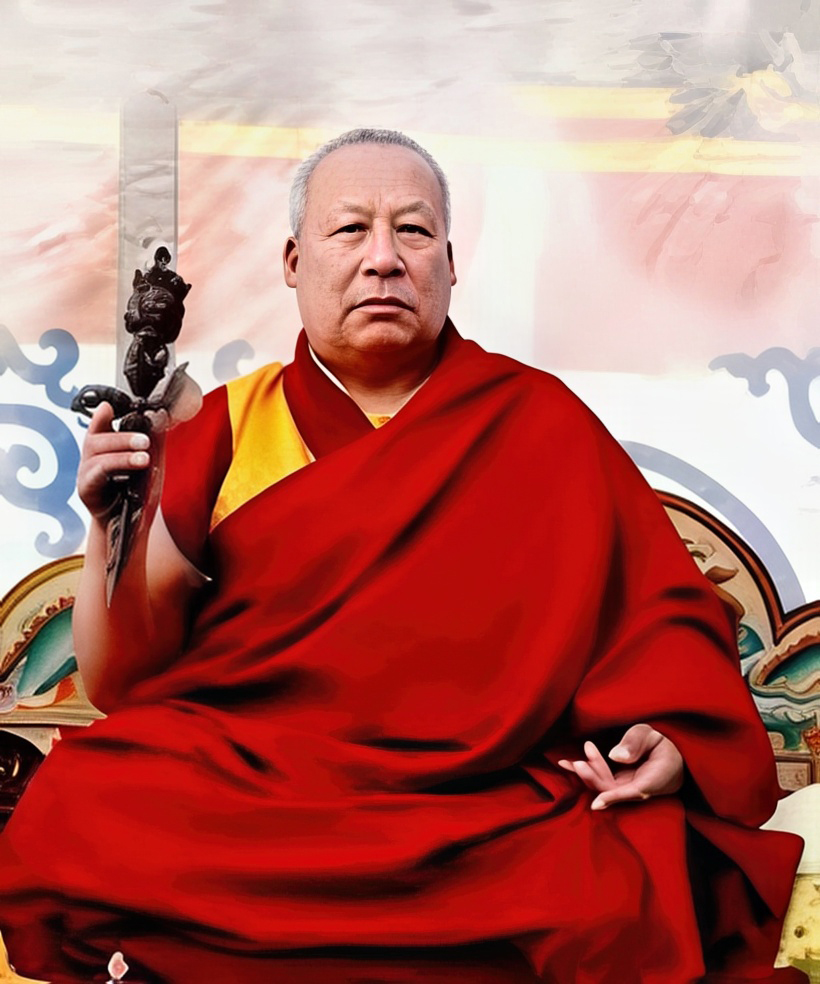
The Collected Works of Khangsar Tenpa'i Wangchuk
To date there haven been three volumes published and additional ones will be coming in 2027 and 2028. The following are the published volumes to date, followed by the works currently in the publishing process or being translated.

$69.95 - Hardcover
The Precious Treasury of the Dharmadhatu
The third volume of the Collected Works of the modern Tibetan master Khangsar Tenpa’i Wangchuk, this is the first published translation of a commentary on the 14th-century master Longchenpa’s Precious Treasury of the Dharmadhātu, a verse text on the direct practices to realize the nature of mind taught within the Nyingma school of Tibetan Buddhism.
Among the great works of the omniscient Longchenpa, The Treasury of the Dharmadhātu, one of Longchenpa’s (1308–1363) Seven Treasuries is particularly revered among Tibetan poetic and scholastic works on Dzogchen meditation. The text expounds the intrinsic nature of the mind—awareness, the vast expanse of the dharmadhātu—as the basis and medium of the endless and unlimited display of phenomenal existence, of both mundane samsara and exalted nirvana. The teachers are laid out according to the approach of trekchö, the practice that “cuts through” the tough deposit of conceptual fabrication and habitual tendencies, accumulated from beginningless time, which obscures the original, unimpaired, and ever-present purity of the mind’s nature, the sugatagarbha.
Khangsar Tenpa’i Wangchuk’s modern commentary brings to life the fine points of the text as a meditation manual. Completed in 1996, it is the first extensive and detailed commentary ever to be produced on Longchenpa’s root text, with the exception of the author’s own autocommentary. In contrast with the general “meaning commentary” composed by Longchenpa himself, which explains the sense of the root text in broad strokes, supporting it with many scriptural citations, Tenpa’i Wangchuk’s is a “word-commentary” in which both the words and syntax of the root text are elucidated, thereby giving clear guidance and insight into the intentions of the author. Both root text and commentary are said to reflect the realizations of the lineage holders of the tradition and present a clear picture of the perfection of the Buddhist path.

$34.95 - Hardcover
The Natural Openness and Freedom of the Mind: A Treasure Tantra of the Great Perfection
The Dzogchen tantra titled The Natural Openness and Freedom of the Mind teaches the advanced practices of trekchö, thögal, and bardo. This tantra is a mind terma, or treasure, of the modern tertön, or treasure revealer, Deshek Lingpa—recognized as an emanation of Yudra Nyingpo, a student of the great translator Vairotsana and one of Padmasambhava’s twenty-five disciples. Khangsar Tenpa’i Wangchuk’s commentary elucidates the finer points of the view and practice of this rich and profound text, which combines into one stream the Heart Essence teachings of Vimalamitra, Padmasambhava, and Vairotsana.
Deshek Lingpa’s root text and Khangsar Tenpa’i Wangchuk’s commentary are translated here for the first time, continuing an extended project to render the latter’s entire collected works into English. These teachings are considered advanced and secret, to be taught only to those who have received transmission from a qualified master.
Jigme Khyentse Rinpoche
Rinpoche gave a series of oral transmissions for these texts and in this video, we collected his teaching and on-the-fly translations from the first volume, much of it from his autobiography.

$44.95 - Hardcover
The Precious Treasury of the Fundamental Nature
This first and only commentary on the fourteenth-century Buddhist master Longchenpa’s essential text, The Precious Treasury of the Fundamental Nature. The root text establishes the definitive view of the secret class of pith instructions of Dzogchen, the Great Perfection. Tenpa’i Wangchuk’s word-commentary elucidates the nature of phenomena adhering closely to the internal structure of Longchenpa’s verses, clearly presenting the four vajra principles of the nature of phenomena: nonexistence, evenness, spontaneous presence, and single nature.
The Padmakara Translation Group has provided a clear and fluid new translation of Longchenpa’s root text. The commentary by Khangsar Tenpa’i Wangchuk is here translated for the first time, commencing an extended project to render his entire collected works in English. This is an invaluable resource for students of Buddhism who wish to deepen their understanding of the nature of mind and phenomena as presented in the Great Perfection tradition.
The Contents of Forthcoming Volumes
- Khangsar Tenpa’i Wangchuk’s biography (put together by his disciples)
- 30 poems
- 26 spiritual songs and counsels related to the Great Perfection, including 4 termas
- Over 40 prayers and short practice texts (a few pages each)
- Commentary Thogme Zangpo’s 37 Practices of a Bodhisattva
- Outline of the above commentary
- Autocommentary on a six-page poem of advice in vol. 1
- Autocommentary on a 20-verse poem (in vol. 1) expressing realization in solitude
- Instructions on the four thoughts that turn the mind to Dharma
- Condensed commentary on the Prayer to be Reborn in the Copper-Coloured Mountain
- Word by word commentary on Karma Chakme’s Prayer to be Reborn in Sukhavati
- Commentary on Samantabhadra’s Aspiration to the Excellent Way
- Commentary on The Cloudless Sky, a poem of instruction on the trekchö by KTW’s teacher Togden Lodrö Gyatso
- Notes (zin bris) on Old yogis’ pointing out instruction
- Notes (zin bris) on Three Statements that Strike the Key Points
- Overview (structural outline with first words of each section) of Flight of the Garuda
- Commentary on Rigdzin Dupa (Assembly of Vidyadharas) from Longchen Nyingtik
- Notes on Manjushri Dzogchen Aspiration
- Commentary on a treasure of pith instructions discovered by Jigme Phuntsok and Tare Lhamo

$39.95 - Paperback
The Gathering of Vidyadharas: Text and Commentaries on the Rigdzin Düpa
This collection includes the 70 page translation of Khangsar Tenpa'i Wangchuk's The Light of the Sun and the Moon—Generation and Perfection Stages: Notes Explaining the Words of the Rigdzin Düpa, the Inner Sadhana for the Longchen Nyingtik Cycle.


$21.95 - Paperback
The following is an account, excerpted from one of the great introductions to Tibetan Buddhism, The Heart of Tibetan Buddhism: Advice for Life, Death, and Enlightenment by Khenpo Sherab Sangpo on his connection with Khangsar Tenpa'i Wangchuk:
"I met Khangsar Tenpe Wangchuk in 2012, during a monthlong Dzogchen teaching that he gave at his monastery, Akyong Khangsar in Golok in eastern Tibet. Initially I was hesitant to attend his teachings because I felt no connection to him and thought that I had received enough prior teachings. However, one of my cousins assured me that his teachings would be unique and different from what I had received before. Therefore, I decided to attend.
Moved by the power of his wondrous Dzogchen teachings, I requested the pointing-out instructions from him. Although three thousand students were attending his teachings, Khangsar Tenpe Wangchuk gave the pointing-out instructions to only ten students at a time. In my group, three had never received these instructions and seven had heard them from other teachers. Khangsar Tenpe Wangchuk’s pointing-out instructions were very special and spontaneous. During that time, I was powerfully hit by each word.
On the last day of the teachings, I asked him to give me a recording of his Dzogchen teachings so that I could listen to them in the future. He said that if I promised to teach Jigme Lingpa’s Yeshe Lama, a crucial Dzogchen text, that he would give the recording to me. I accepted immediately.
In addition, he told me that he had practiced ten different preliminary practice texts. However, he had recognized the nature of mind through the blessings of The Chariot of Liberation, a treasure text revealed by Dudjom Lingpa. Then he gave me the reading transmission, encouraged me to practice this profound preliminary practice, and advised me to give it to my students. In 2014, in accordance with Khangsar Tenpe Wangchuk’s wishes, many of my students started practicing this ritual text.
Khangsar Tenpe Wangchuk passed away in 2014, and his final words of advice to his disciples were:
'Compassion for sentient beings, respect for cause and effect, devotion to the Three Jewels, taking to heart the pith instructions, love for Dharma friends and for the ordained sangha in particular—let there be harmony, perfect observance of the vows, and service to the teachings. Please, never forget this advice.'"