
Adapted from The Way of Ch’an by David Hinton

During the Sung Dynasty, Ch’an’s basic elements as defined by the T’ang Dynasty masters continued and evolved. The great innovation in Sung Dynasty Ch’an is the sangha-case collection. The Ch’an written tradition is composed primarily of prose works by and about Ch’an masters, records of their lives and teachings. These records contain a great deal of conventional explanatory teaching, which is necessary to prepare students for Ch’an’s wordless insight. That direct insight is conveyed in the more literary dimension of those records: poetry, which was perfectly suited to the quick, deep insights of Ch’an, and story-telling typified by poetic distillation: enigmatic sayings and wild antics intended to upend reason and tease mind past the limitations of logical thought. These are performative, rather than explanatory—enacting insight rather than talking about it. As such, they operate with poetic wildness and immediacy, rather than the usual explanatory or utilitarian discourse. In this, they come as close as language can to Ch’an’s transmission outside of words and teaching.
Ch’an teachers began drawing especially revealing moments from the records of earlier teachers, moments that distill the essential insights of Ch’an, and assigning them as puzzles for students to ponder.* These scraps of story came to be known as kung-an (公案, now widely known in its Japanese pronunciation: koan)—a term that had come into use prior to the Sung, no later than the eighth century. Kung-an means a “court case,” and more literally a “public case.” The term was adopted to the Ch’an situation for a number of reasons. First, a kung-an is a factual situation that needs to be understood accurately, like a court case (although understanding here demands responding within the enigma, at a level that precedes thought and analysis). Second, each kung-an represents a kind of precedent to which practitioners can refer. And finally, masters originally conducted kung-an training in “public,” when the entire monastic community was gathered together. Hence the translation adopted here: “sangha-case” (sangha meaning “a Buddhist community”).
These are performative, rather than explanatory—enacting insight rather than talking about it. As such, they operate with poetic wildness and immediacy, rather than the usual explanatory or utilitarian discourse. In this, they come as close as language can to Ch’an’s transmission outside of words and teaching.
Eventually, in tenth century Sung China, teachers began gathering these sangha-cases into collections used for training students. Three of these collections established themselves as the enduring classics, perennially employed over the centuries in China, then Japan and on into contemporary America: Blue-Cliff Record, Carefree-Ease Record, No-Gate Gateway. Such sangha-case collections are now generally considered mere collections of stories that provide an occasion for teaching. But in fact, they are carefully constructed literary/philosophical texts designed to create a direct and immediate experience in the reader: the experience of enlightenment. Indeed, they are perhaps the pinnacle of Ch’an literary creation: a new and unique and profound literary form that combines zany storytelling with poetry and philosophical prose. Although an oversimplification, it almost seems as if the history of Ch’an leads us through the path of practice: centuries of teaching preparing for the direct non-verbal realization induced by sangha-case practice. Hence, sangha-case practice represents the culmination of Ch’an’s “separate transmission outside all teaching.”
In the Great Transformation of things, however, fruition is always the beginning of decline. And that is true here in a certain sense. Early Ch’an teaching was spontaneous and idiosyncratic, each teacher finding a unique method of transmission. But in sangha-case practice, an established set of teachings became the standardized curriculum used by all Ch’an teachers. And this reliance on standardized sangha-case training has continued to the present. So, some say sangha-case practice might be seen as a diminuation of spontaneous energy of Ch’an teaching, a routinization and standardization—and therefore a contradiction of the very spirit of Ch’an.
Sangha-case practice places Ch’an’s wrecking-crew center stage, for the demolition of analysis and thought is itself the matter immediately at hand. As such, sangha-cases are a primary means of resolving what is the most fundamental question for Ch’an practice, and perhaps for human consciousness in general: how to move past the seeming separation between thought and silence, subjective and objective, mind and landscape, self and Cosmos. And in this, they find their ultimate philosophical source in the profound paradox of Lao Tzu’s Tao Te Ching and Chuang Tzu’s zany sages and perplexing pronouncements, such as this:
When Lao Tzu died, Modest-Ease went in to mourn for him. He shouted three times, then left.
Sangha-case practice reinforces meditation, which remained the heart of Ch’an practice. Solutions to sangha-cases always involve responding with a spontaneous immediacy that lies outside any logical analysis; and sangha-case training pushes the student toward that goal with enigmatic utterances and outbursts and antics. The correct answer to a sangha-case is whatever emerges spontaneously from that silent emptiness cultivated in meditation practice, where the logical construction of thoughts has not yet begun—the generative emptiness of wu-mind: no-mind or Absence-mind. It is wu-wei at the most profound level: “Absence action,” improvisational action in which one moves as the generative source, as the Cosmos unfurling its possibilities. And in this, it is a cultivation of the sage dwelling that defines Ch’an enlightenment, dwelling heart and mind as an organic part of the Great Transformation of things.
*For a full explanation of how sangha-cases functioned in Ch’an practice, see the “Sangha-Case” chapter in China Root (pp. 113-19).
Share
Related Books


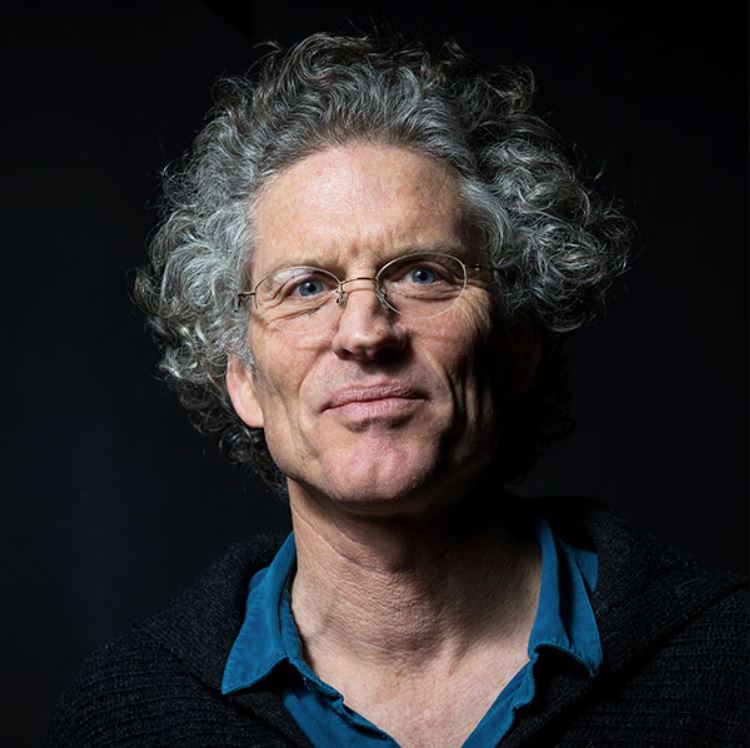
David Hinton has published numerous books of poetry and essays, and many translations of ancient Chinese poetry and philosophy—all informed by an abiding interest in deep ecological thinking. This widely-acclaimed work has earned Hinton a Guggenheim Fellowship, numerous fellowships from NEA and NEH, and both of the major awards given for poetry translation in the United States: the Landon Translation Award (Academy of American Poets) and the PEN American Translation Award. Most recently, Hinton received a lifetime achievement award by the American Academy of Arts and Letters.